Lockouts · Markham
Broken Key Extraction
Overnight the deadbolt froze, and this morning the key would only turn partway. One more push and it sheared off flush with the face of the cylinder.
Broken Key Extraction
In plain words
Freezing is one of the bigger seasonal causes of broken keys here. Meltwater runs into the keyway during a thaw and freezes overnight, so the plug is locked in ice, and most people respond by turning harder. The blade gives before the ice does. A winter extraction visit therefore begins with thawing: lock de-icer or gentle warmth frees the plug, then the fragment is drawn out and the cylinder is dried and given the lubricant its maker specifies. You leave with the piece out, a new key cut, and a small tube of de-icer so the next frozen morning is a pause rather than a snap.
How the visit goesA roommate tried to help with tweezers, then by gluing the other half to it. The fragment is now further in than it started, there is dried glue around the keyway, and the front door still does not open.
Markham
How the visit goes
What happened in the second before it broke
Your account of the break is evidence. A key that snapped while you were turning against resistance points to ice, a binding bolt or a swollen door. One that broke as you pushed it in suggests grit or a damaged pin in the keyway. A key that had been sticking for weeks and finally gave up hints at worn pins or a loose cylinder cap. A key that simply cracked at a deep cut with no drama was probably fatigued metal. Each story leads to a different check after the piece is out, so a few honest sentences about the moment save guesswork later.
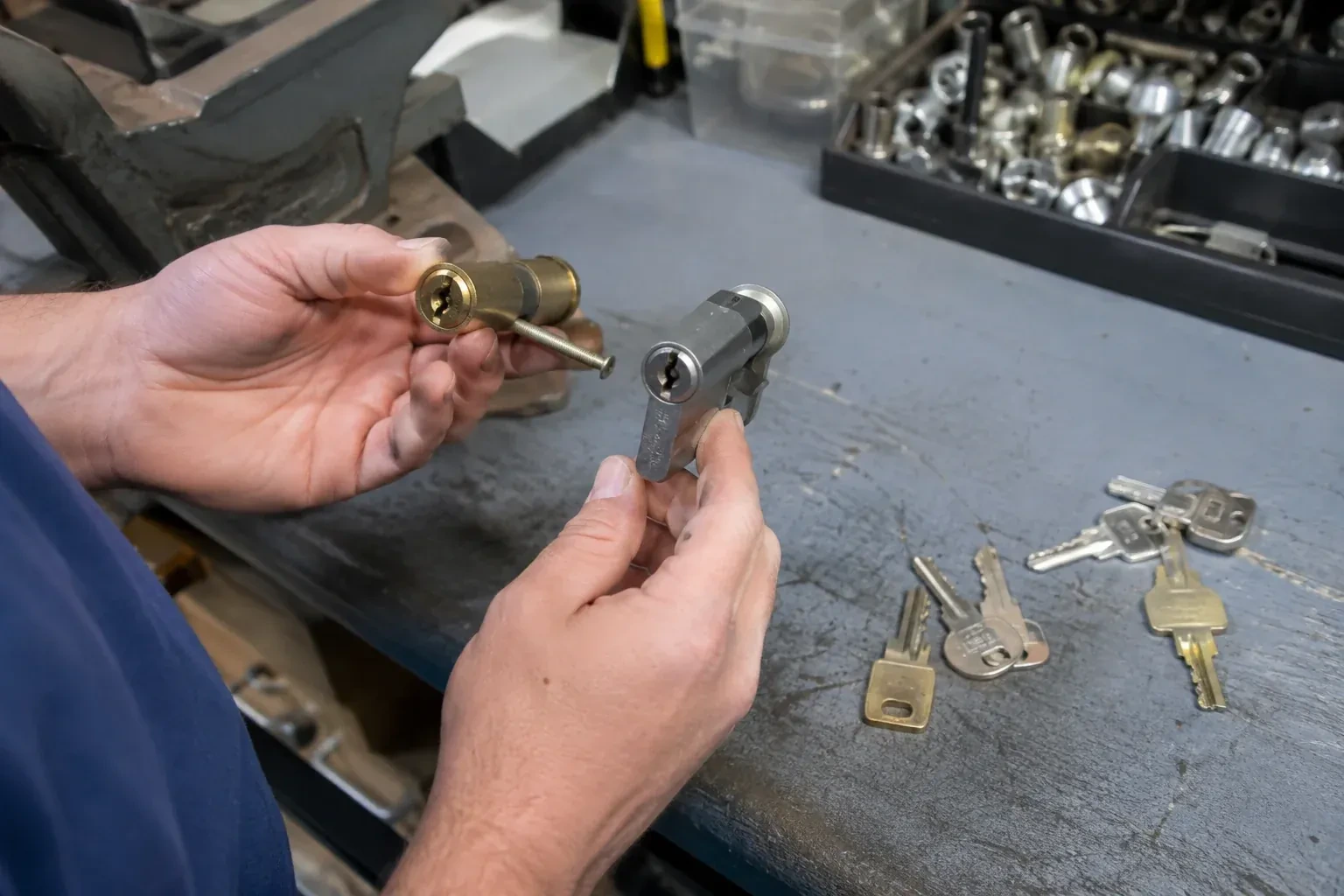
Taking the cylinder apart to free it
Occasionally a piece is too deep, glued in, or wedged past the pins where no extractor can reach. On a serviceable, removable cylinder, the lock is serviced from behind: removed from the door or padlock (a rekeyable padlock is normally unlocked first), its cap or retaining clip taken off, and a plug follower used to push the plug out while the top pins and springs stay in place. With the plug in hand the fragment is tapped out from the rear, the pins inspected, and everything cleaned before reassembly. Where the cylinder is non-rekeyable, damaged or will not free this way, a replacement cylinder is the alternative, explained first.
A cylinder that has been looked after
Extraction usually doubles as a service. The keyway has been blown clear of grit and salt, the pins and springs checked for wear, the cylinder cap snugged if it had loosened, and dressed with the lubricant its maker specifies rather than a one-size-fits-all product, since some cylinders take a dry graphite or PTFE spray and others forbid graphite outright. General household oils and sprays commonly collect dust and clog the pin chambers. A puff of the right lubricant twice a year, spring and fall, keeps the cylinder turning freely, and a key that starts to need force is an early message worth acting on before it breaks.
Broken Key Extraction
In the van
- Vehicle key blades and chip shells
- Replacement cylinder or deadbolt
- Key blanks and code cutter
- Fine-jawed extractor pliers
- Key gauge and decoder
What affects the quote
Same fees day, night or weekend
1Number of keys cut
Copies are counted individually. One replacement for a single occupant and four for a household are different lines, and you choose the number on the spot.
2How deep the fragment sits
A piece standing above the cylinder face is the simplest case. One flush with the face or deep behind the pins takes longer, finer work with hooks and spirals, and the quote reflects that.
3How the new key is made
Cutting from a key code or a crisp spare, decoding the two halves with a gauge, or cutting a restricted blank from system records each take different time and stock.
Broken Key Extraction: questions
How long does the extraction usually take?
It depends on how the piece is sitting. A protruding fragment in a plug at rest can be out in moments. A deep piece behind lifted pins takes patient work with hooks and spirals. A glued or corroded fragment may mean removing the cylinder and freeing it from behind. Cutting and testing the new key, and any door adjustment, add their own time. The locksmith gives a sense of it after the first look.
What lubricant should I use on the lock afterwards?
Whatever the lock's own maker specifies, since cylinders differ: many call for a dry graphite or PTFE spray blown into the keyway and worked in with the key, once or twice a year, while others prohibit graphite and specify their own product instead. General-purpose oils, grease and sprays feel smooth at first but on most cylinders collect dust and clog the pins, which leads back to the sticking that breaks keys. A little goes a long way; too much of any lubricant can also hold moisture.
My key is a restricted or high-security type. Can it still be extracted and replaced?
Extraction is the same careful process; the keyway is usually narrower and the cuts more complex, so it takes longer. The replacement key is different: restricted blanks are cut only from the system's records, so have the authorization card that was supplied with the system to hand, or the locksmith who installed it is contacted. Until then the spare, if you have one, keeps the door working.
Lockout Services
- Business Lockout ServiceYou signed the lease on the unit last week and the landlord handed over possession, but the…
- Break-In Damage Lock RepairYou came home to find the front door standing open.
- Seized & Jammed Lock OpeningThe key turns a full circle without any resistance and the deadbolt stays exactly where it is.
Broken Key Extraction near you
Below, each lock and key service we offer in Markham gets its own page, with a description that assumes no prior knowledge. Start anywhere. Many customers arrive for a lockout and leave knowing exactly why the strike plate on the back door has bothered them for years.