High security · Markham
Safe Installation & Servicing in Markham
Behind the filing cabinets sits a heavy floor safe nobody ever bolted down, left exactly as the last owner set it. It opens fine, but a determined pair of hands could simply tip it into a van.
Safe Installation & Servicing
In plain words
Relocating an existing safe is closer to a small structural project than a simple carry. The unit is unbolted, moved on proper equipment rather than dragged, and protected through doorways and stairwells that were never designed with several hundred pounds of steel in mind. At the new address the floor or wall construction is checked again from scratch, because a slab that held the safe at the old office may be entirely different from the one at the new address, and anchoring hardware is chosen to match rather than reused automatically.
How the visit goesBehind the filing cabinets sits a heavy floor safe nobody ever bolted down, left exactly as the last owner set it. It opens fine, but a determined pair of hands could simply tip it into a van.
Markham
How the visit goes
The condition of a safe that is already in place
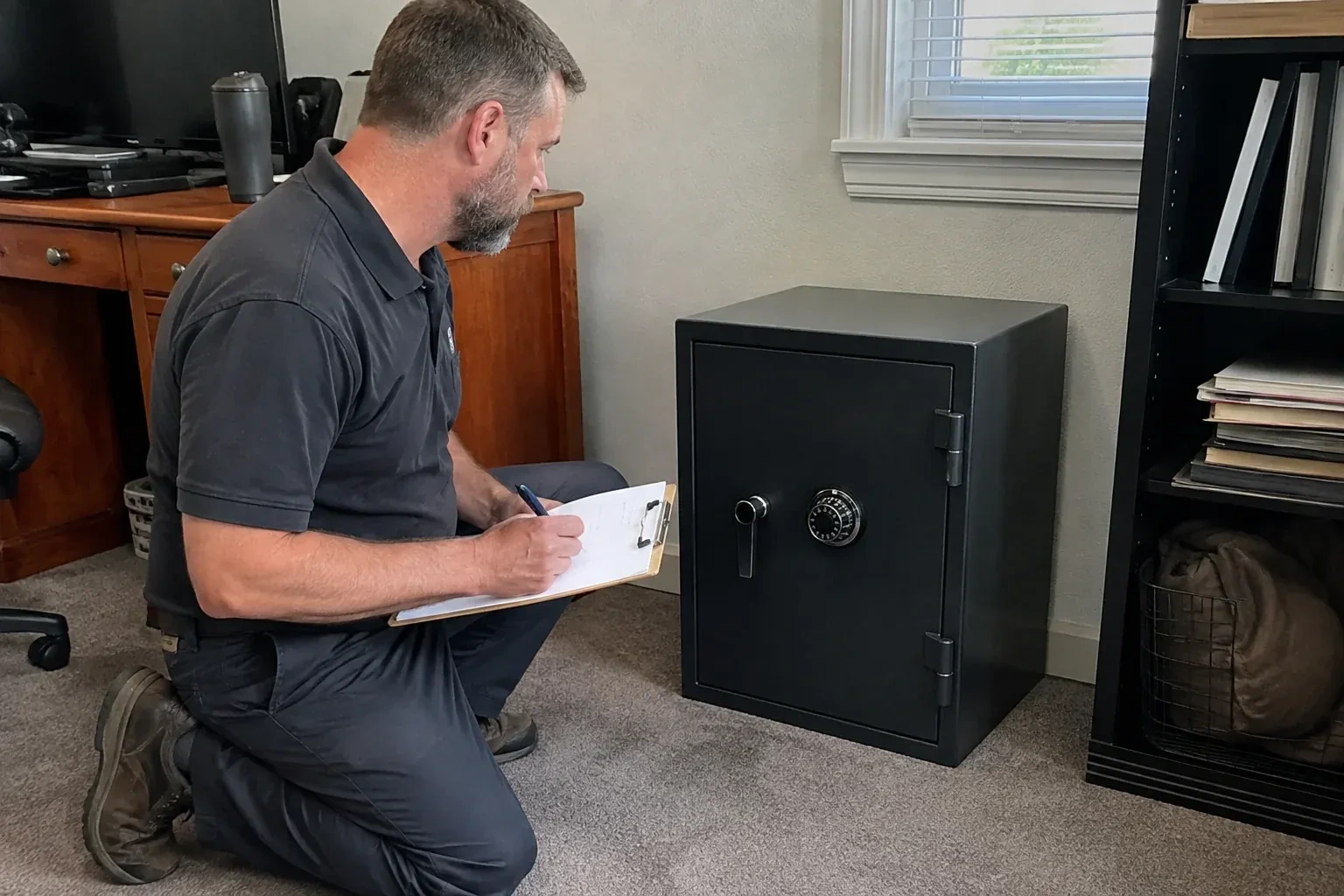
For a servicing visit, the first look is at what years of sitting quietly have done to the unit. Bolt-work is worked by hand to feel for stiffness, grinding, or a bolt that does not fully retract. Hinges and the door seal are checked for rust or a gap that lets in air. The locksmith also asks how long it has been since anyone changed the batteries or tested the lock, because a unit that has never had attention since it was installed usually needs more than a light check to bring it back to full working order.
Moving a safe without moving the problem with it
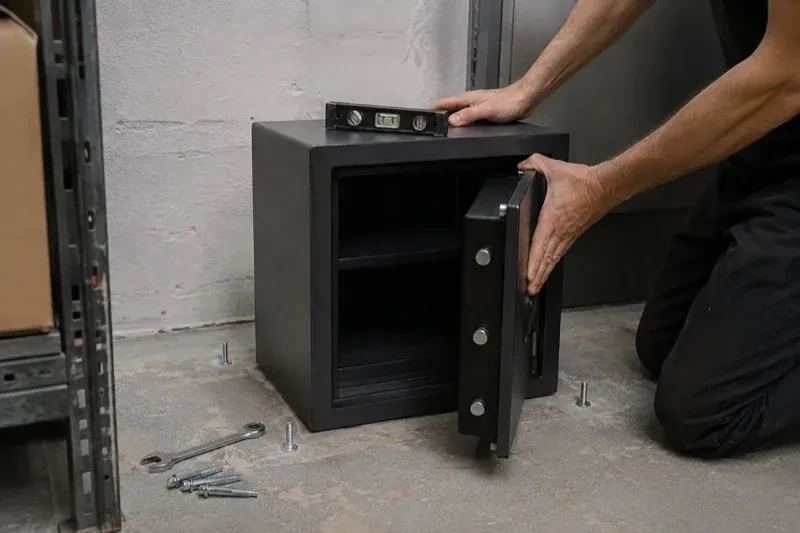
Relocating a bolted-down safe starts with removing the existing anchors cleanly, since a broken bolt left in the floor becomes someone else's problem later. The safe is walked or wheeled out on equipment built for its weight, with the route measured in advance so it clears every doorway and turn. At the new address the same assessment happens as for a brand-new installation: the floor or wall is identified, the safe is leveled, and it is anchored again from scratch rather than assumed to sit safely just because it once did elsewhere.
Batteries that get changed before they fail
An electronic lock gives some warning before it dies, usually a beep or a flashing light during normal use, and treating that warning as a job to do that same week rather than eventually is what keeps a dead battery from turning into a locked-out morning. Keeping a spare battery of the correct type near the safe, rather than searching for one after the warning starts, closes the loop. The mechanical override key behind the keypad is worth keeping somewhere separate from the safe itself, not taped underneath it.
Safe Installation & Servicing
In the van
- Bolt-work lubricant
- Level and floor shims
- Nine-volt backup battery
- Concrete anchor bolts
- Moving dolly and floor protection
What affects the quote
Same fees day, night or weekend
1Floor or wall construction
Solid concrete, a wood subfloor reaching into joists, and tile each call for a different anchoring approach and different hardware, and the substrate is confirmed before any drilling begins.
2Burglary rating chosen
A higher burglary rating generally means a heavier, more solidly constructed body, which affects both the unit itself and the equipment needed to move and anchor it.
3Condition of an existing safe
Rust on hinges, stiff or grinding bolt-work, a lock that hesitates, or anchoring that was never done all add work beyond a routine check on a servicing visit.
Safe Installation & Servicing: questions
How do I decide between a bigger safe now or upgrading later?
It comes down to how much the amount being stored is likely to grow over the next few years. A safe sized with some room to spare avoids an early repeat visit, while a unit sized exactly for today's needs can be outgrown within a year or two for a growing business. Anchoring and lock work do not change much with size, so the main trade-off is simply the footprint the larger unit takes up in the room.
Can the combination or code be changed after installation?
Yes, on both mechanical and electronic locks. A mechanical dial is reset to a new combination by working inside the lock body, while an electronic keypad is simply reprogrammed at the keypad or through its service menu. Changing it after a change in staff, a move, or simply out of caution is routine work rather than anything unusual, and it can be arranged as its own visit.
Can an existing safe be bolted down after years of sitting loose?
In most cases, yes. The floor or wall behind it is checked the same way as for a new installation, anchor points on the safe itself are located, and hardware suited to that surface is fitted without needing to move the unit far from where it already sits. An older safe occasionally has anchor holes that were never used, which makes this part of the job simpler than starting from scratch.
High Security Locks
Safe Installation & Servicing near you
Below, each lock and key service we offer in Markham gets its own page, with a description that assumes no prior knowledge. Start anywhere. Many customers arrive for a lockout and leave knowing exactly why the strike plate on the back door has bothered them for years.