Commercial · Markham
Commercial Rekeying in Markham
You have just signed the lease on a unit the previous tenant ran for a decade. The landlord handed over three keys, the back door wears a padlock nobody can open, and nobody can say how many front-door keys are still out there.
Commercial Rekeying
In plain words
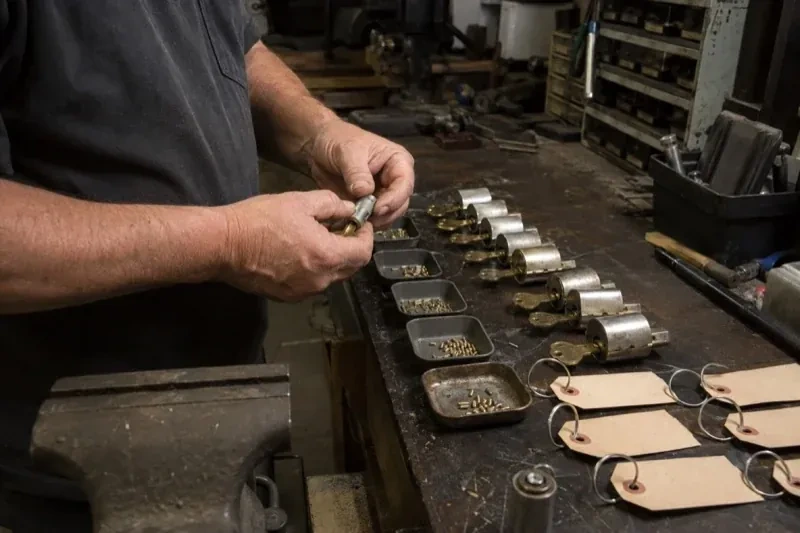
Commercial rekeying changes the pins inside a business's existing lock cylinders so that a new key operates them and every earlier key stops working, while the hardware itself stays on the door. The locksmith works from a list of the openings the business controls and the people who need to pass through each one, sets the cylinders to fresh combinations, cuts keys to match and records which key opens which door. Because nothing is replaced unless it is worn, a whole premises can be brought back under control in one scheduled visit, with the doors locking and unlocking exactly as before but answering only to keys you have counted.
How the visit goesThe drawer behind the counter holds a tangle of keys with tape labels: front old, side, Dave. Some open things, some open nothing, and the hardware-store copies mean the true count drifted long ago past anything written down.
Markham
How the visit goes
Who needs to open what
The keying plan is a picture of how the business runs, so the assessment asks who goes through which door on a normal day. Front-line staff need the customer entrance and perhaps the stockroom; supervisors add the office; the owner and the bookkeeper hold the cash room; the IT contractor reaches the server closet and nothing else. Out of that conversation come the key groups: doors keyed alike so one key covers a role, doors keyed differently where separation matters, and whether a master for the owner earns its place. The plan also names anything left out on purpose, so the chart shows both what changes and what stays.
Cutting and marking the new keys
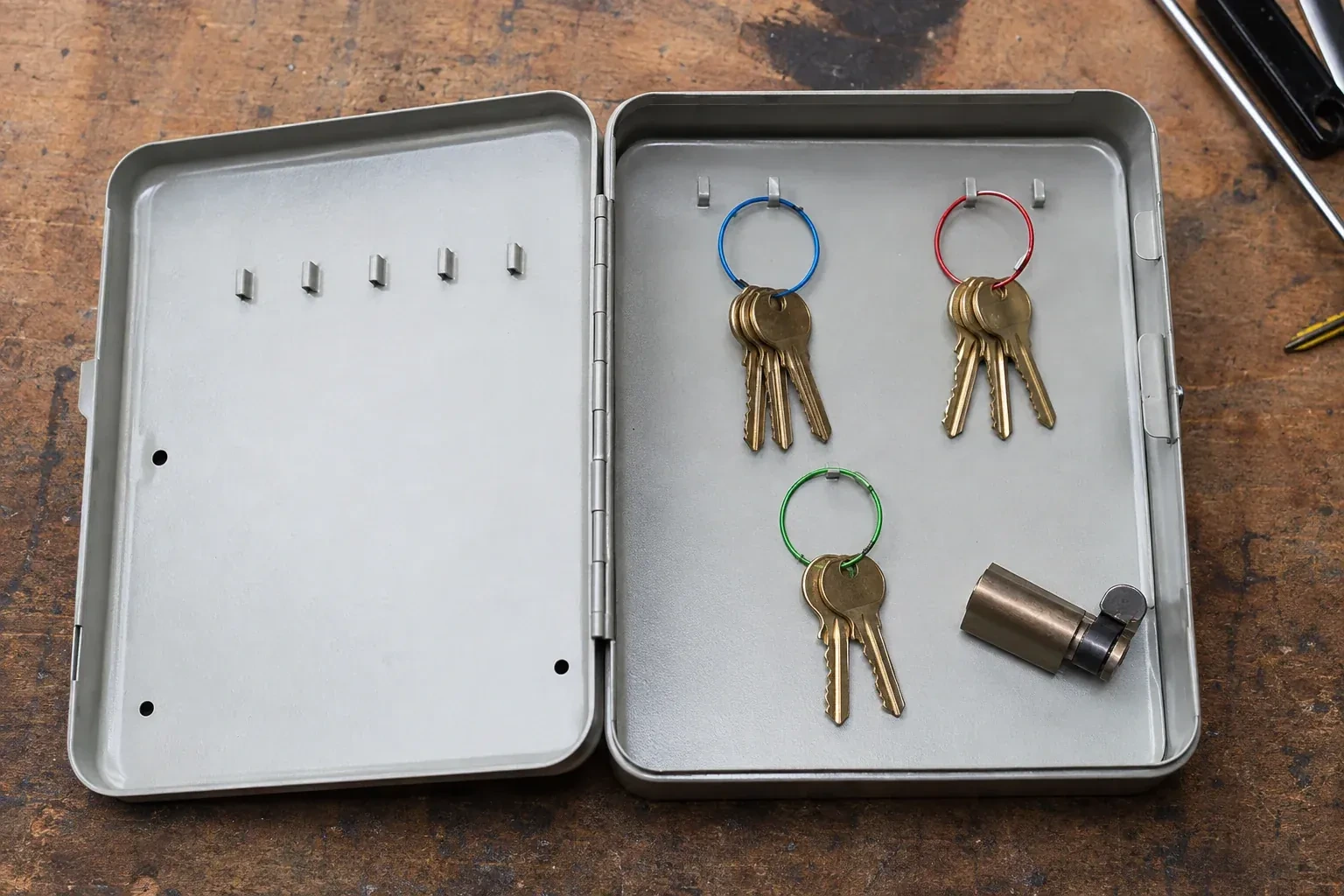
Keys are cut to the new combinations on a code machine rather than traced from another key, so every copy is exact and the tenth key fits as cleanly as the first. Each key is stamped with a short code that means something only on the keying chart; the business name, the address and the word for the door it opens stay off the metal, so a lost key gives nothing away. Keys are counted out by group, tagged, and listed against the names of the people who will carry them. Where the plan uses a restricted keyway, the blanks are drawn against the authorization letter, and that letter is filed with the chart for future orders.
A keying chart in plain language
You leave the visit with a one-page chart that lists every opening by name, the key group it belongs to, the code stamped on that group's keys and how many were cut. It is written for the manager, not the locksmith: the stockroom is called the stockroom, and a glance shows that key group B opens the office and the cash room and nothing else. The bitting details that a locksmith needs to add a cylinder later are kept separately and securely. Pin the chart inside the manager's cupboard, keep a copy off site, and it becomes the reference every future key question is answered from.
Commercial Rekeying
In the van
- Dry graphite or PTFE lubricant
- Cylinder removal and spanner tools
- Commercial pin kit
- Mortise cylinder set screws and cams
- Key stamp set and tags
What affects the quote
Same fees day, night or weekend
1After-hours or split visits
Work done after closing, before opening or split across two visits to suit trading hours costs the same amount as a single daytime block. The exact figure is confirmed on site once the number of cylinders and the keying plan are known.
2Distance to the premises
Travel to the site is part of the call-out, and a unit in a downtown plaza and one at the end of a rural industrial road are different trips.
3Cylinders that need replacing
Where a worn, corroded or low-grade cylinder is better replaced than repinned, the new part is added for that door alone, and the locksmith points it out before the work begins.
Commercial Rekeying: questions
Do I need my landlord's consent before rekeying my unit?
Read the lease, because that is where the answer lives. Commercial tenancies are governed mostly by the lease itself, and many leases require the tenant to tell the landlord when locks change, to provide a key for emergencies, or to use the landlord's approved locksmith. Doors on the building's master system, such as corridor or service doors, are normally the landlord's to change. Bring the lease to the assessment and the locksmith will sort the doors accordingly.
What do you do with the old keys?
They are gathered, tested at each rekeyed door to confirm they no longer work, and then cut through so they can never be used or copied. You can keep the pieces or the locksmith takes them away. Any old key that still operates a door you chose to leave unchanged is handed back and noted on the chart, so it is clear which keys remain live and which are scrap.
Should we rekey every time an employee leaves?
Rekey when a key has not come back or when the departure was unfriendly; when a key is returned and the register confirms it, the cylinders it opened are as secure as before. Businesses that want a response to every departure without a visit each time fit interchangeable cores and swap them in-house. Whatever the trigger, dealing with only the cylinders that key opened keeps the response proportionate.
Commercial Locks
- Access Control InstallationThe team has grown past the point where one shared key still makes sense.
- Panic & Exit HardwareTwo doors used to swing as a pair at the community hall entrance, but one leaf has started closing…
- Commercial-Grade Lock ReplacementAn inspection report flagged the rear exit as needing hardware that opens with one motion and no…
Commercial Rekeying near you
Below, each lock and key service we offer in Markham gets its own page, with a description that assumes no prior knowledge. Start anywhere. Many customers arrive for a lockout and leave knowing exactly why the strike plate on the back door has bothered them for years.