High security · Dickson Hill
Safe Opening & Combination Change in Dickson Hill
The bookkeeper who set the office safe's code retired in a hurry, and the float cash for tomorrow's registers is sitting behind a keypad nobody else in the building can operate.
Safe Opening & Combination Change
In plain words
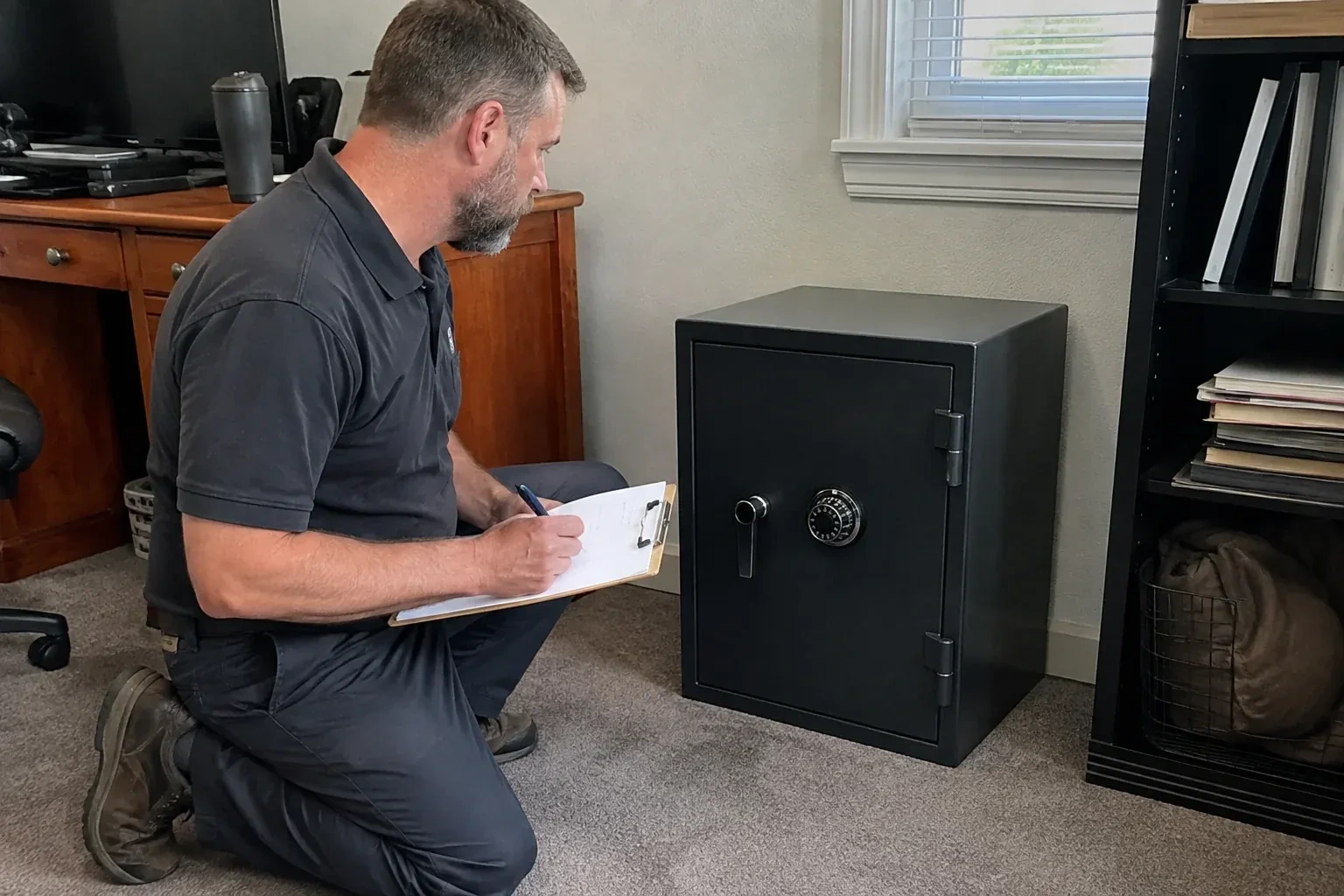
Changing a combination is not only for a safe that has stopped opening. Businesses routinely have a working safe recombined the moment someone who knew the old code leaves, retires or changes roles, because a combination known outside the current staff is a loose end worth closing on its own. The visit is short when the safe already opens fine: confirm authority, dial or key in the old combination, set a new one, and test it before anyone signs off on the work.
How the visit goesDecades of daily use have left the law firm's old dial safe drifting: the numbers line up close to where they should, never quite enough to drop the bolt.
Dickson Hill
How the visit goes
Mechanical dial or electronic keypad?
The two lock families are opened in entirely different ways, so telling them apart comes early. A mechanical dial relies on a wheel pack turned into alignment by hand, reading resistance and feel rather than any battery or circuit. An electronic keypad instead depends on a stored code and a power source; some models add a reset or override sequence, though many need that connection made at the lock body inside the container rather than from outside. Some commercial safes carry both, a keypad for daily use with a mechanical dial as a backup, and each half is assessed on its own terms. Confusing the two wastes time trying an approach the lock was never built to respond to.
Resetting an electronic keypad
Electronic safe lock recovery options vary by model: some support a manufacturer reset code entered through the keypad or an emergency key hidden behind a cover plate, while others need a small reset tool connected to a port on the back of the lock, which sits inside the secure container and still needs the door opened by other means first. The locksmith works through the specific model's own procedure where one exists, which for many models restores factory defaults or wipes stored codes rather than revealing the old one. Where the keypad itself has failed rather than merely losing power, the input unit is replaced and reconnected to the existing lock body before any new code is set.
A little care keeps the lock reliable
A mechanical dial benefits from being turned through a full combination cycle occasionally even when the safe is not otherwise in use, since a dial left untouched for years is more likely to develop the stiffness that led to this visit. An electronic keypad benefits from a battery change on a set schedule rather than waiting for a low-battery warning to appear, since a dead battery at an inconvenient moment is the more common failure than the lock itself. Wiping the keypad and dial face of dust occasionally, without any liquid cleaner, keeps both types responding the way they should.
Safe Opening & Combination Change
In the van
- Replacement wheel pack
- Electronic keypad input unit
- Dial decoding instrument
- Drill rig and carbide bits
- Combination change key
What affects the quote
Same fees day, night or weekend
1Contents that affect how carefully the opening proceeds
Cash, business records, prescription logs or firearms each carry their own handling expectations once the door opens, which can shape how the visit is planned and quoted.
2Age and condition of the safe
An older lock with visible wear, a stiff dial, or a keypad with worn buttons often needs more careful handling than a newer unit in good working order.
3Lock type: mechanical dial, electronic keypad or key
Each lock family calls for different tools and a different amount of time on site, and a safe with more than one lock, such as a keypad backed by a mechanical dial, involves assessing both.
Safe Opening & Combination Change: questions
Should I change my safe's combination even if it still opens fine?
It depends on who still knows the old one. If a bookkeeper, manager or previous owner who had the combination is no longer with the business, resetting it closes that gap even though nothing about the lock itself has failed. A safe that only the current staff have ever known the code to generally does not need changing on that basis alone.
What should I have ready before the visit?
The safe's brand and model if you know them, whether the lock is a dial, a keypad or a key, roughly how old the safe is, and how the combination was lost or forgotten. Mention whether the safe holds anything with its own handling needs, such as firearms or business records, and how many people should have the new code afterward.
When does a locksmith decide to drill a safe instead of opening it another way?
Drilling is chosen when the gentler options for that specific lock, manipulation and decoding on a mechanical dial, or a manufacturer reset or override on an electronic one, are unavailable or have not worked, rather than following one fixed order on every safe. It is also the answer when the lock has genuinely failed, such as a seized wheel pack or a dead circuit board with no working override. The decision is explained before drilling starts, not discovered afterward.
High Security Locks
Safe Opening & Combination Change near you
Every service listed here has been done many times on doors in Dickson Hill, which is why each page can be specific about what gets checked, how the work is carried out, and what you are left with afterwards. Read the one that matches your situation, then reach out with any question the page did not answer.